Kanary
Designing a hybrid web-mobile privacy product to improve conversion
Brief
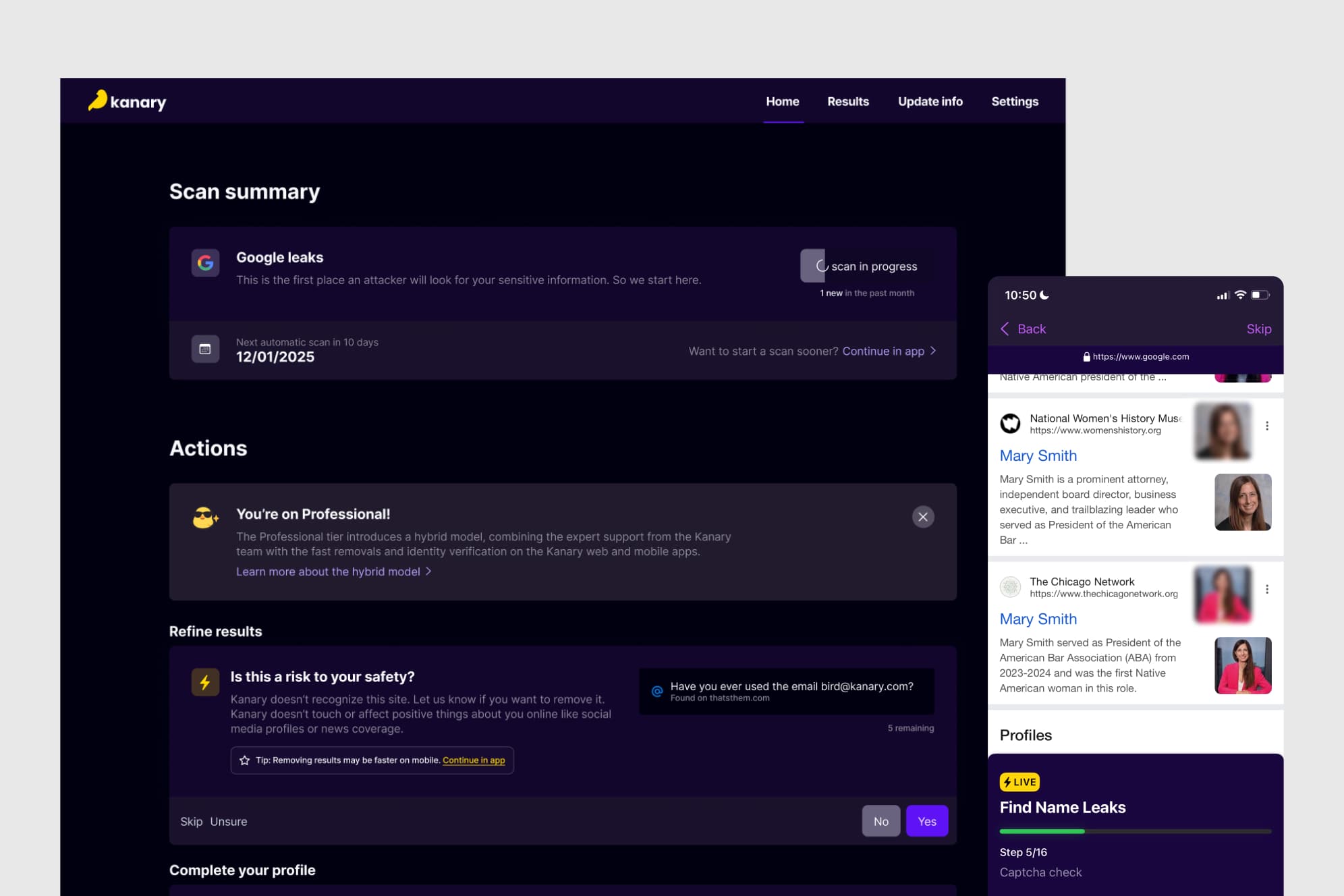
Kanary is a digital privacy platform that helps individuals and organizations identify and remove exposed personal information. Despite strong marketing site traffic, many visitors dropped off before installing the mobile app.
We introduced a hybrid web–mobile experience that allowed users to review scan results on the web before completing removals in the mobile app. This reduced friction and increased conversion from landing page visit to account creation by 10× within the first week of launch.
Role
Product Design Lead. Owned strategy, design, research, copy, and product marketing. Collaborated with the founder, GTM lead, and four engineers.
Company
Kanary
83% of users who clicked “Download App” button never install the mobile app
Problem
Our hypothesis was that the mobile-only entry point created too much commitment too early. This was supported by historical data showing that Kanary’s legacy web product had stronger conversion.
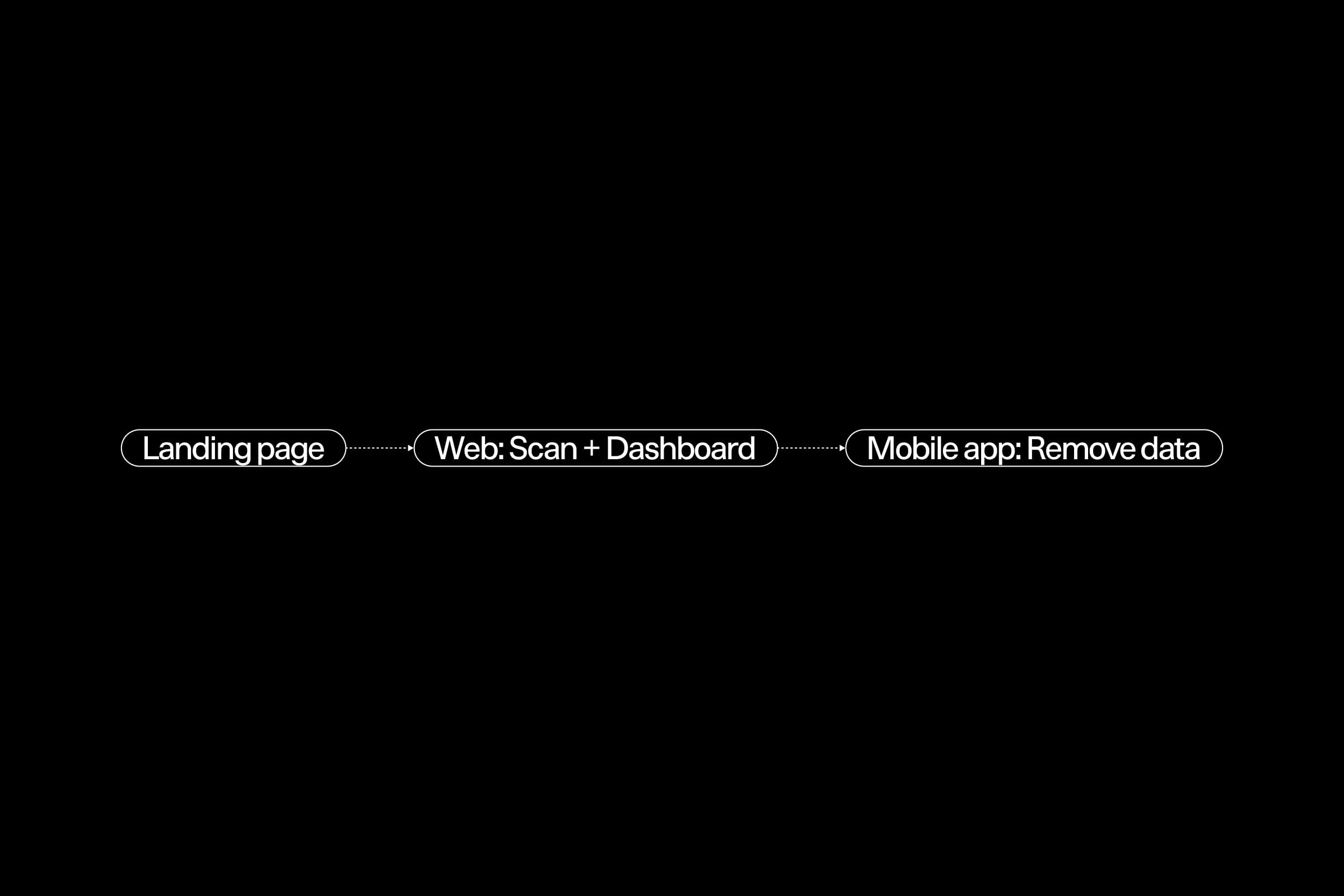
Product strategy: hybrid web-mobile flow balancing constraints
While a web entry point could improve conversion, the product could not be fully web-based due to the technical complexity and operational cost of handling data removals. To balance these constraints with user needs, we introduced a hybrid web–mobile model where users could review scan results on the web and complete removals in the mobile app.
How might we help users experience Kanary’s value earlier while creating a seamless web-mobile product journey?
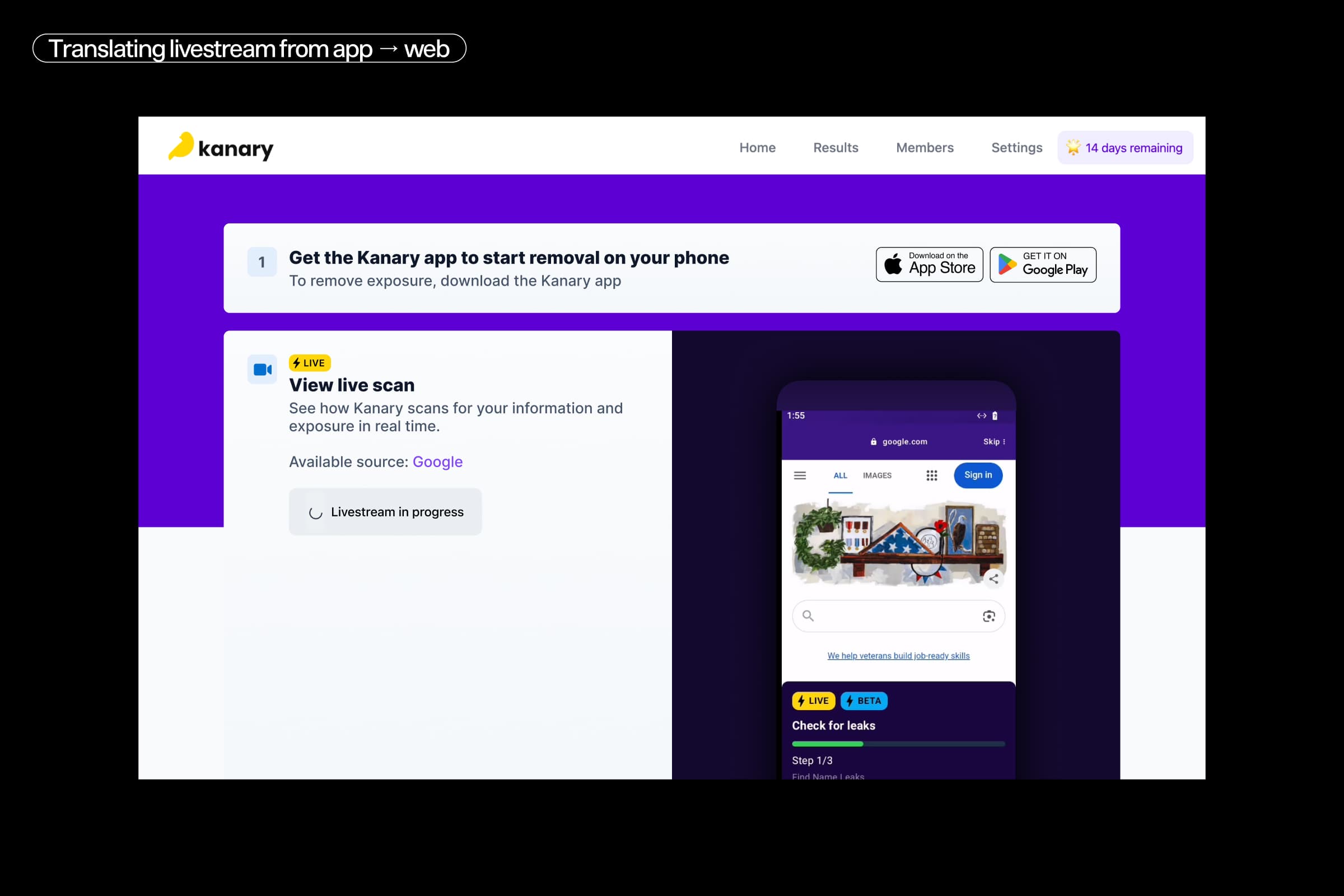
Strategy 1: Improving early product value with Livestrem feature
I explored bringing the live stream experience from the mobile app to the web, where user can see how Kanary search for information leak in real time.
However, there are several challenges with implmenting this feature at scale: 1. Live streams are tied to a single user’s data, which raises concerns around scaliability and costs. 2. Scans could take anywhere from a few minutes to several hours, user may need to wait a long time before the livestream is completed.
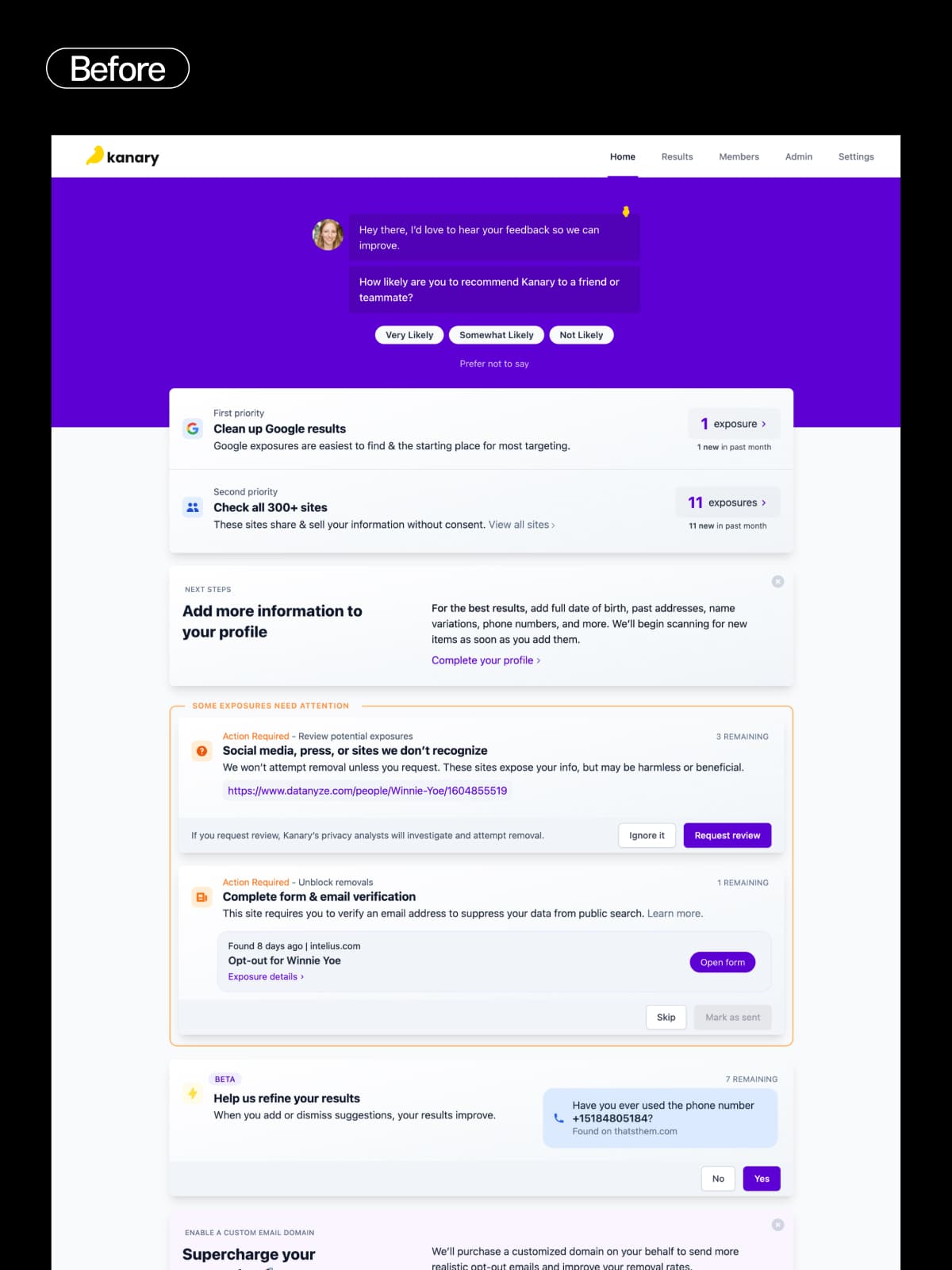
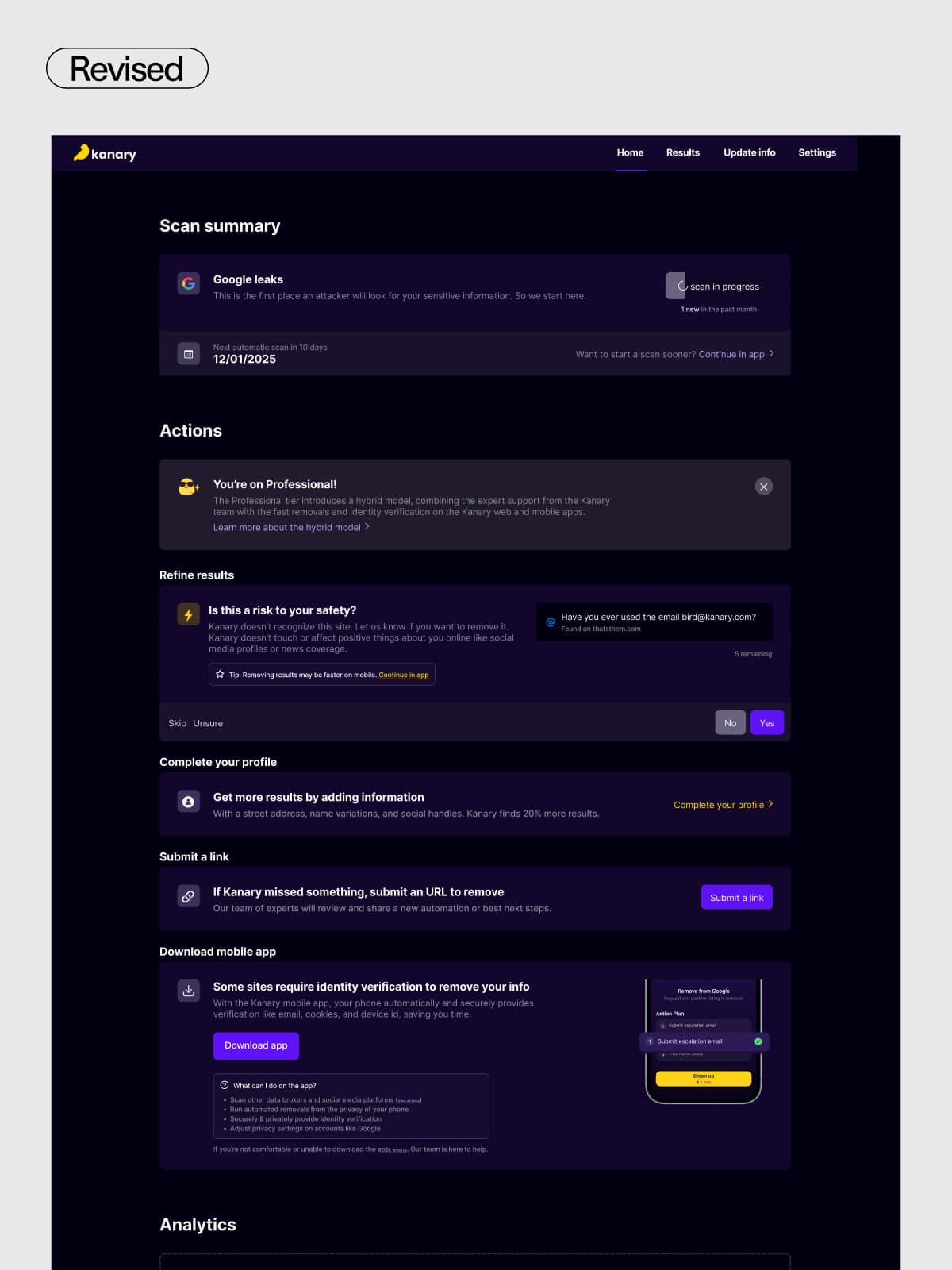
Strategy 1: Improving early product value with dashboard iteration
During the product audit, one of the biggest comprehension gaps I noticed occurred after onboarding, when users land on the dashboard. Instead of focusing on a high-risk feature, I suggested that we re-evaluate the dashboard experience.
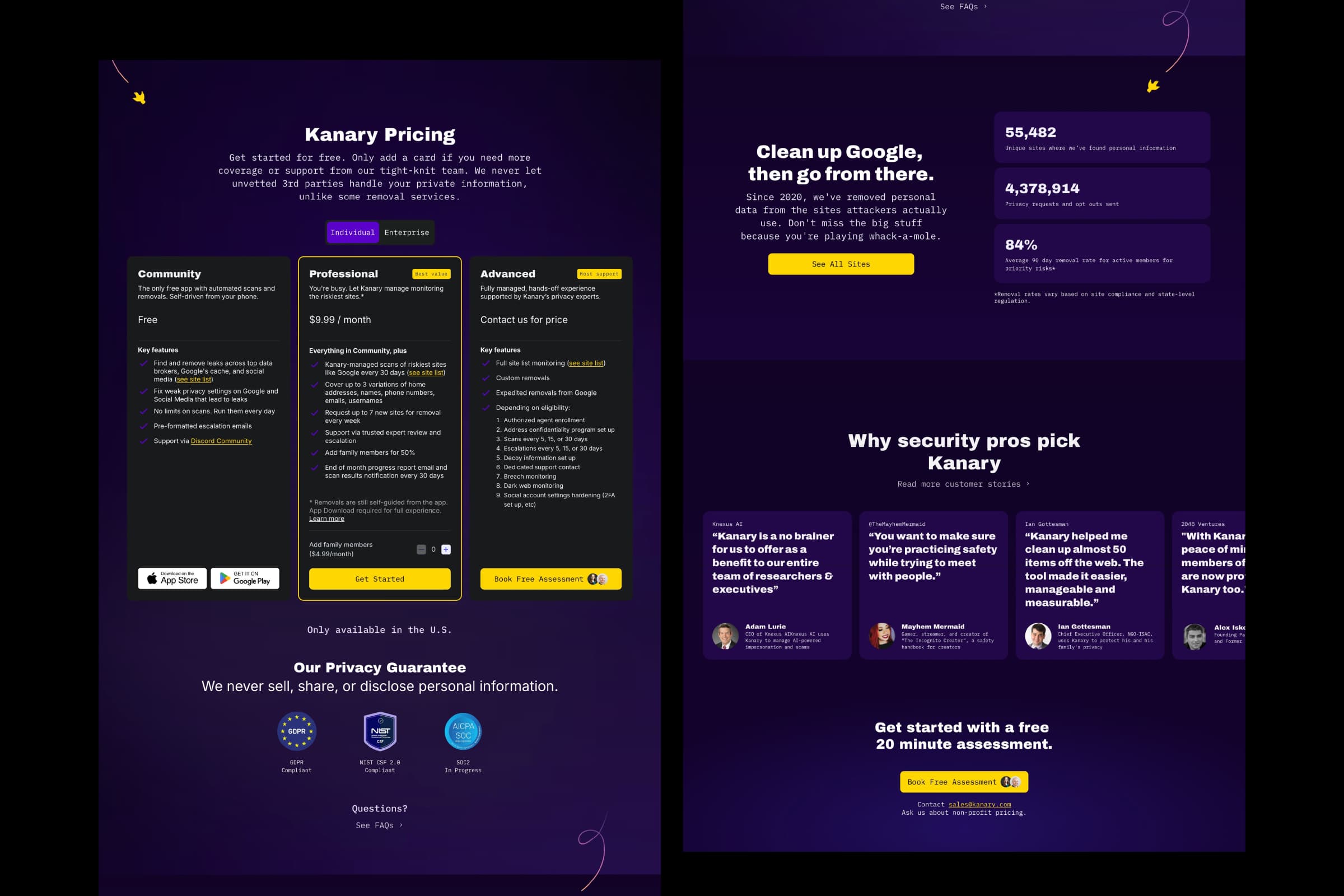
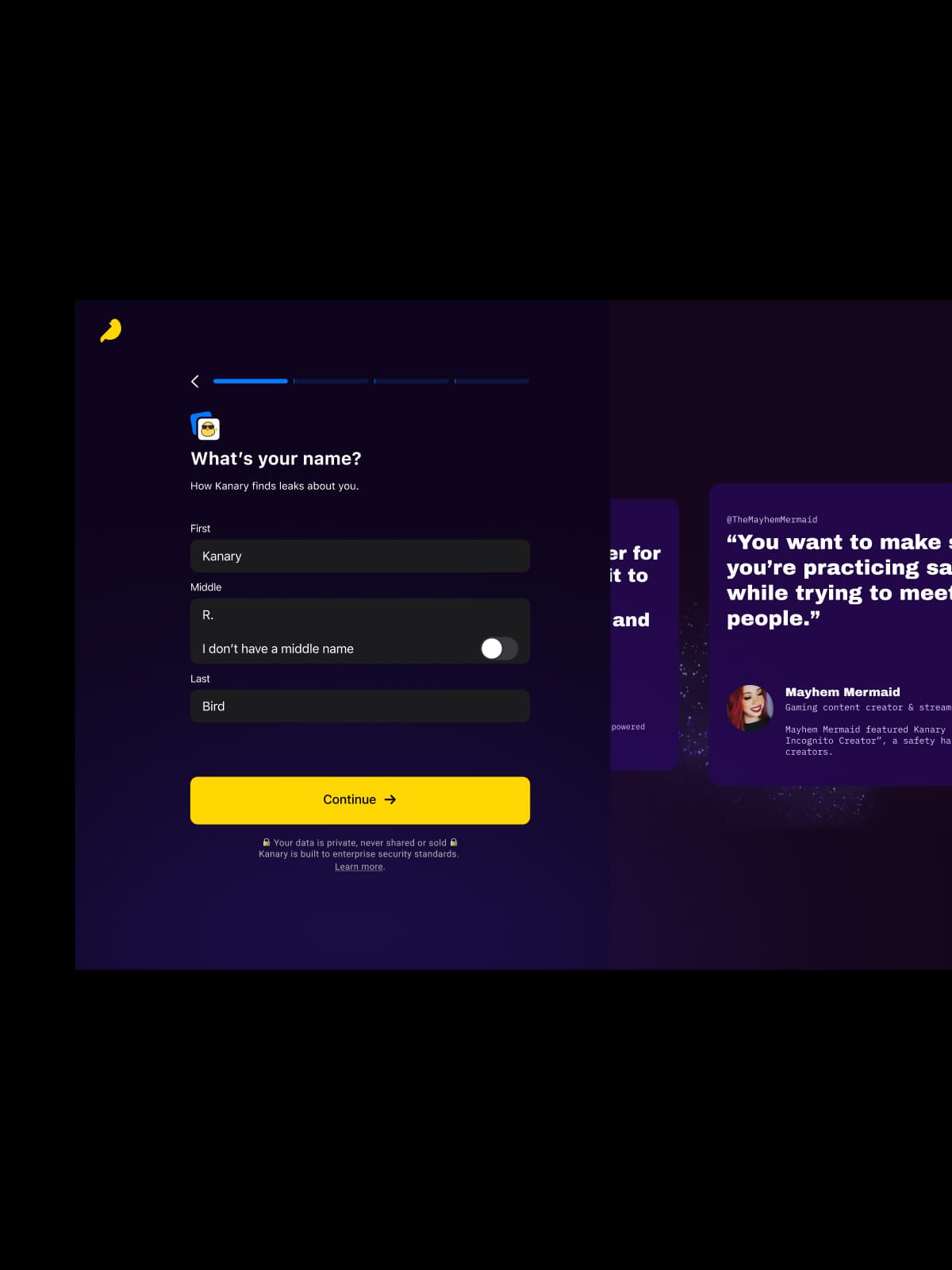
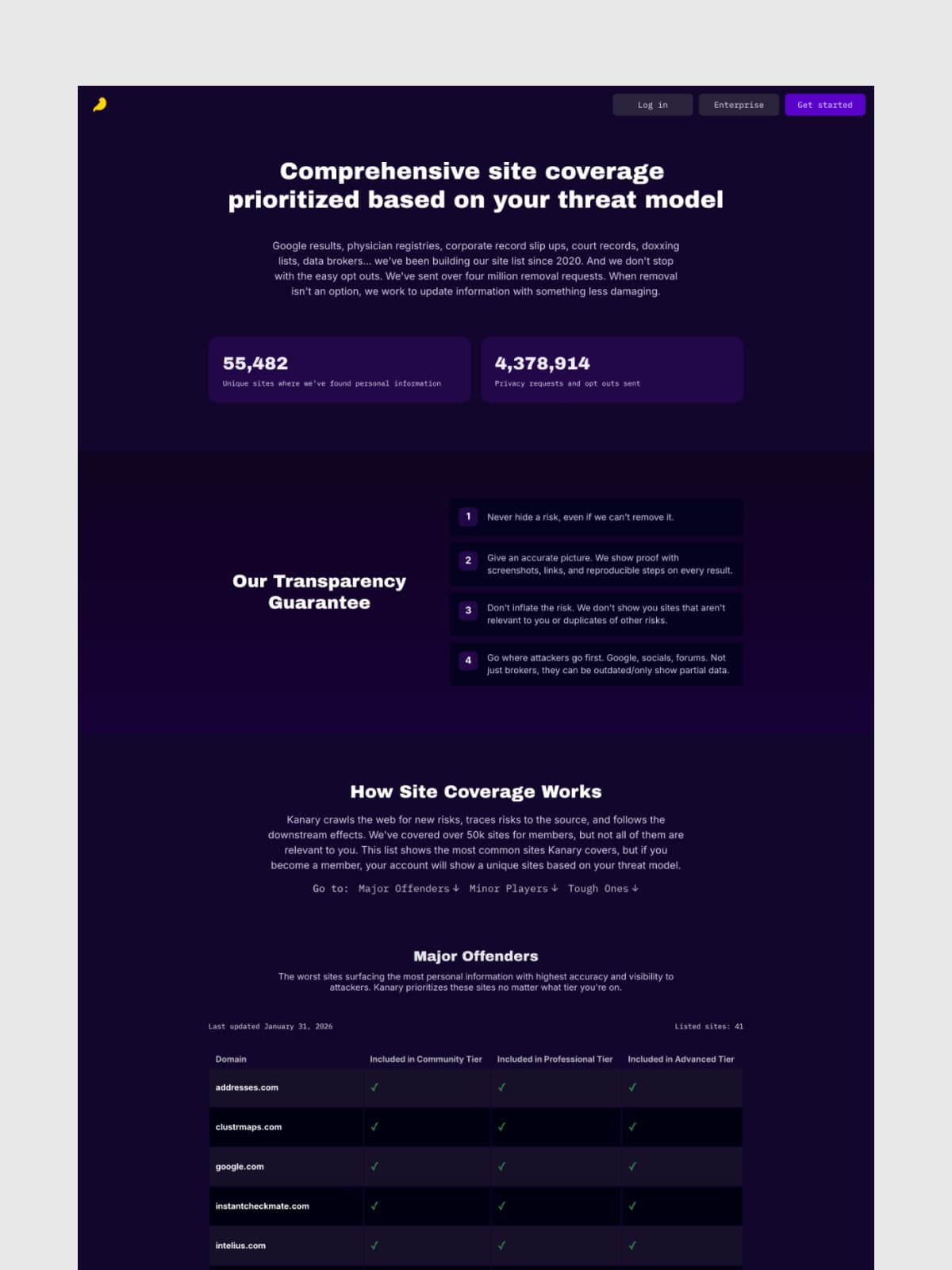
Strategy 2: Clarifying value before sign up
The existing landing page lacked information and proof of legitimacy. Users in the privacy space often need strong trust signals before they are willing to provide personal information. I iterated on the landing page, sitelist, and onboarding flow to better communicate trust and product value.
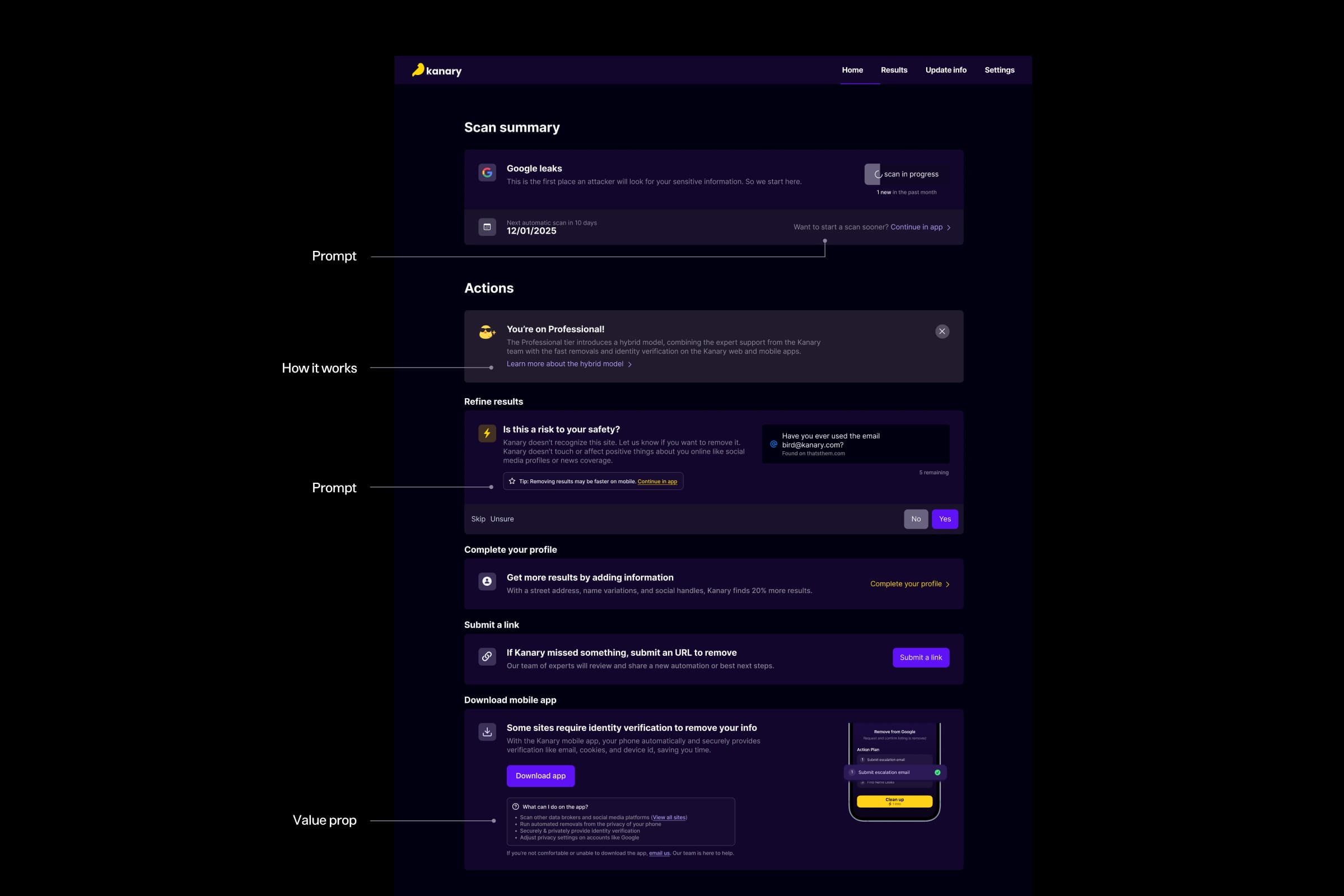
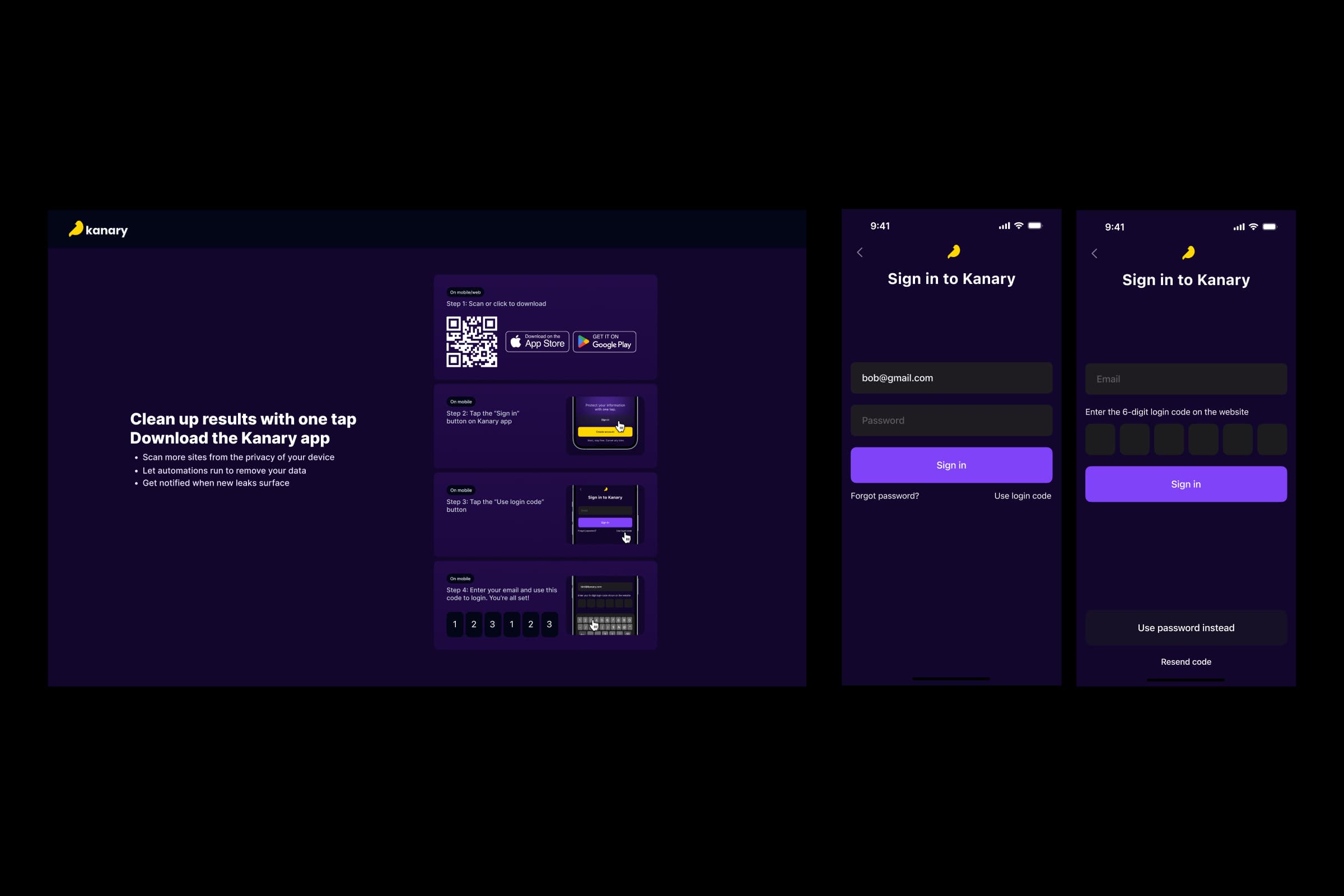
Strategy 3: Bridging web and mobile platforms
After further testing, we realized that while the hybrid model made sense technically and from a business perspective, it created confusion for as most users are used to experiences accessible on web/app entirely rather than ones that need both. We need to better clarify the reason for app download. To better bridge the web to mobile experience, I also designed an OTP login option to reduce authentication friction and made sure key values are consistent across both platforms.
Re-establishing a shared web and mobile design system
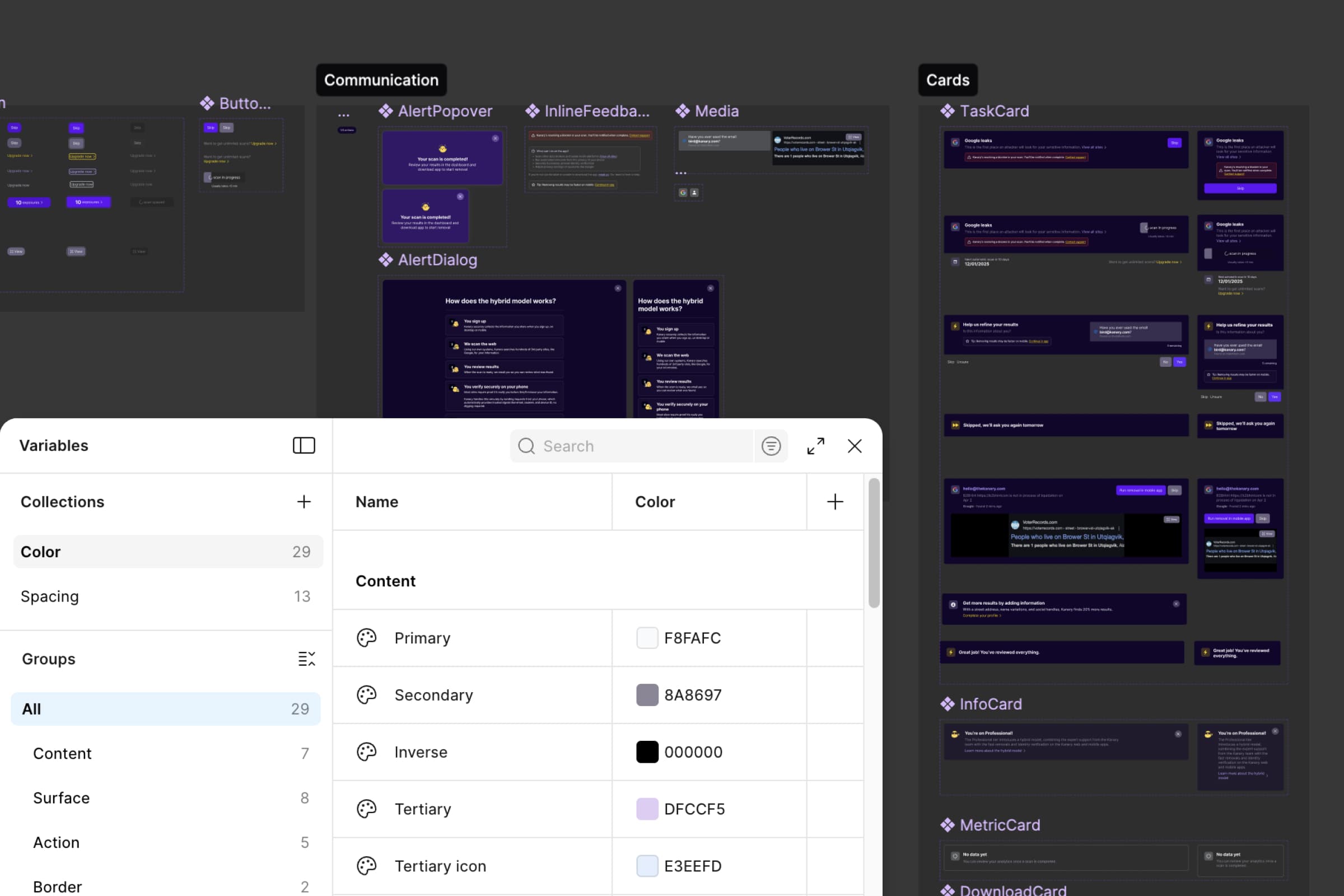
Since the legacy web and mobile products were not designed with cross-platform consistency in mind, the experience feels fragmented. As we’re finalizing the web product, I worked with engineering to re-establish a shared design system across web and mobile, creating a single source of truth to help us scale more efficiently.
Outcome
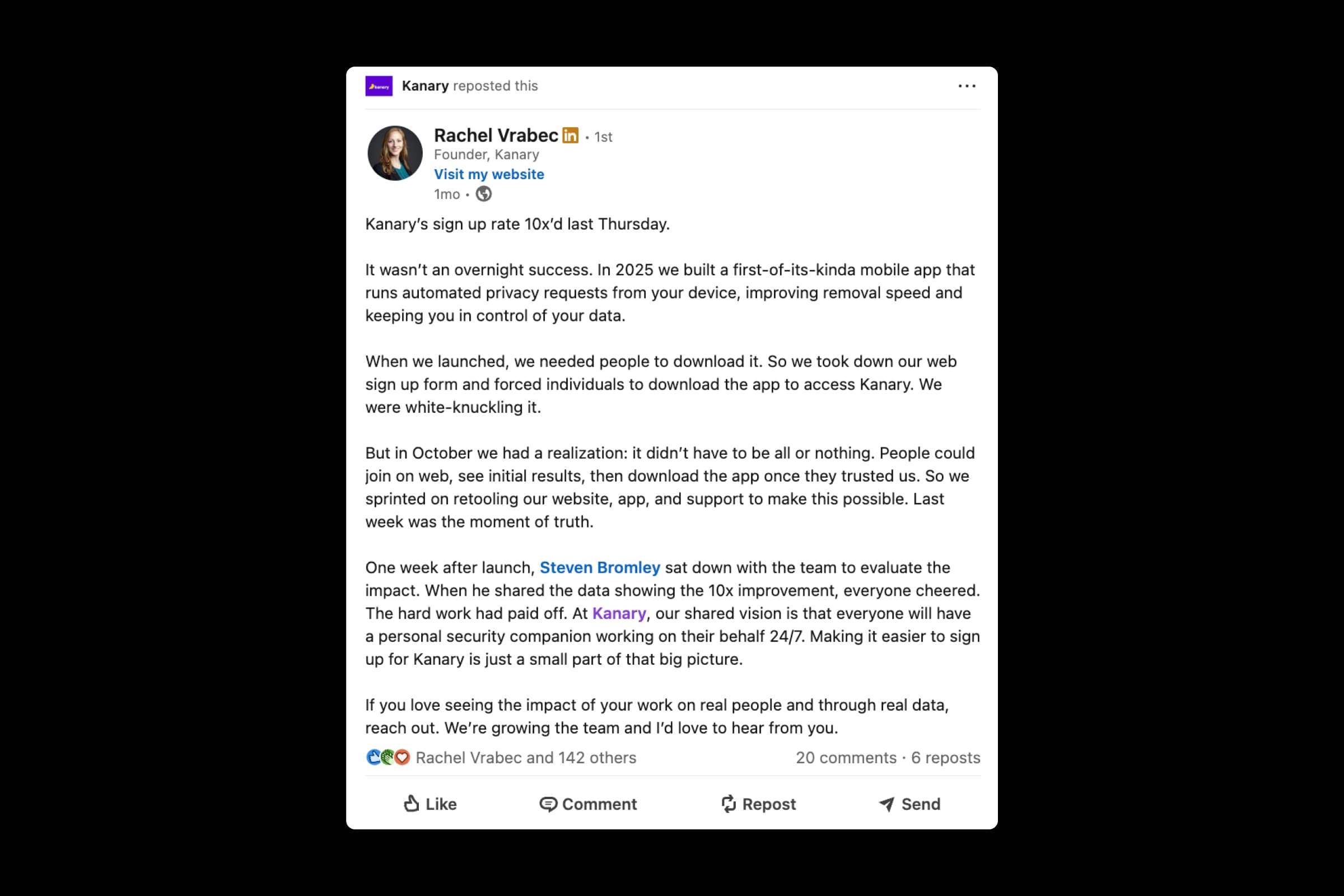
In the first week of launching the new hybrid web-mobile product (professional tier), conversion from landing page visit to account creation increased 10x. After launch, we reviewed analytics as a team to identify the next success metrics for continued iterations.